CASE STUDIES / ERGOBABY

Giving a brand its voice and its community a story to tell.

Ergobaby had strong product conviction and devoted customers. What it lacked was a brand architecture that could channel both into a coherent, expandable platform. We built that platform, then handed it to the people who cared most.

The discipline is not in relinquishing control entirely, but in defining the right constraints and curating with intent.

What Remains True

Messaging must be anchored in meaning before amplification.

The discipline is not in relinquishing control entirely, but in defining the right constraints and curating with intent.

The balance between participation and authorship remains relevant.

The Result

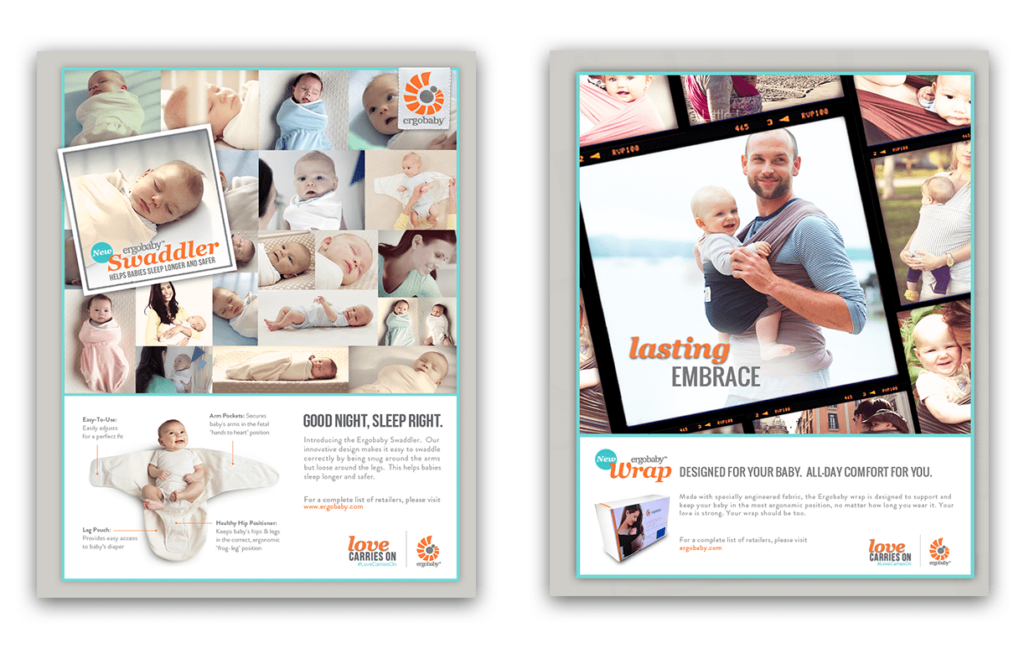
The result was Love Carries On, a participatory storytelling platform built around real parent experiences.

Instead of hero films or lifestyle gloss, the work surfaced intimate moments, consistently sourced socially native imagery, and real-world stylization that reflected how parents were already documenting their lives.

The system scaled because it balanced openness with intentional boundaries.

The approach

The meaning I defined was specific: carrying is not a product behavior. It is the bond between parent and child, one that begins at birth and echoes forward generationally.

That meaning could not be expressed through brand-controlled storytelling. A polished campaign about that bond would feel manufactured. The meaning required real voices, real moments, real imperfection.

So the direction was clear: build a system for parents to express that meaning themselves, within defined boundaries.

We did not relinquish control. We redesigned what control meant.

The guardrails were: content sourced from a single social platform to maintain tonal consistency, visuals remained attic, lived-in, non-studio in quality, and we embraced the filter-heavy stylization of the period, because that was how parents were already documenting their lives.

Consistency came from curation and meaning, not production standards.

I rejected work that felt staged, because staged work would have contradicted the meaning we were trying to surface.


the core tension

The bond between parent and child is deeply personal. It is also deeply private.

Two things could not both be true at the same time: the brand needed to scale that emotional territory publicly, and the moments that defined it were ones parents rarely performed for an audience.

Ask parents to share, and you risk getting performance, not truth. Control the creative, and you lose the authenticity that makes the meaning credible.

The tension was not about production quality. It was about whether real intimacy could survive being invited.

The Disconnect

Ergobaby’s challenge was not simply a messaging problem. The messaging did not stem from a clear, ownable meaning.

At the time, the brand line was “Better parenting by design.” The language emphasized engineering, features, and product superiority. It spoke to function, not identity. It explained how the product was built, but not what carrying meant in a parent’s life.

The meaning was there, but unnamed. Carrying is not a product behavior. It is a bond. One that begins at birth, shapes how children experience the world, and echoes forward into the next generation.

The result was communication rooted in proof points rather than that deeper truth.